A tooth gangrene is a serious disease of the teeth. Gangrene is usually the result of an infection, when bacteria enter the pulp. A tooth gangrene can lead to tooth loss and can affect the surrounding tissues.
Symptoms of tooth gangrene:
Strong pain in the tooth or the jaw. The pain may decrease if the gangrene progresses and the nerves have been completely destroyed
Swelling of the gums around the affected tooth
Swollen and tender lymph nodes in the neck area or under the jaw signal that the infection has started to spread to other parts of the body
A change in the colour of the tooth, which may turn grey, black or brown
Bad breath or an unpleasant taste in the mouth, caused by the decay of the pulp
Pus or discharge from the tooth or the gums
Causes of tooth gangrene:
A cavity is one of the main causes of tooth gangrene. When it is not treated in time, the bacteria that cause the cavity can reach the pulp (the inner part of the tooth that contains the nerves and the blood vessels);
Trauma to the tooth, such as a blow, can disrupt the integrity of the tooth tissue;
Periodontitis is a serious inflammation of the gums. If the infection is not controlled, it can damage the roots of the teeth, penetrate the pulp and create the conditions for gangrene to develop;
Systemic diseases (for example diabetes). Patients with diabetes are more prone to infections in the oral cavity, such as gingivitis and periodontitis. Left untreated, these infections can lead to gangrene. In addition, a high blood sugar level can create a suitable environment for bacteria to grow in the mouth.
How is tooth gangrene diagnosed?
At the Medstom dental centre, a tooth gangrene is diagnosed in the following way:
The dentist collects information about the symptoms and carries out a detailed examination of the oral cavity in order to identify signs of infection, inflammation or decay. The dentist also checks the sensitivity of the tooth to establish whether the pulp is dead. A X-ray image further allows the dentist to see the inside of the tooth and the surrounding bone, and to diagnose the tooth gangrene.
What is the difference between gangrene and pulpitis?
Tooth gangrene and pulpitis are related dental conditions. Here are the main differences between them:
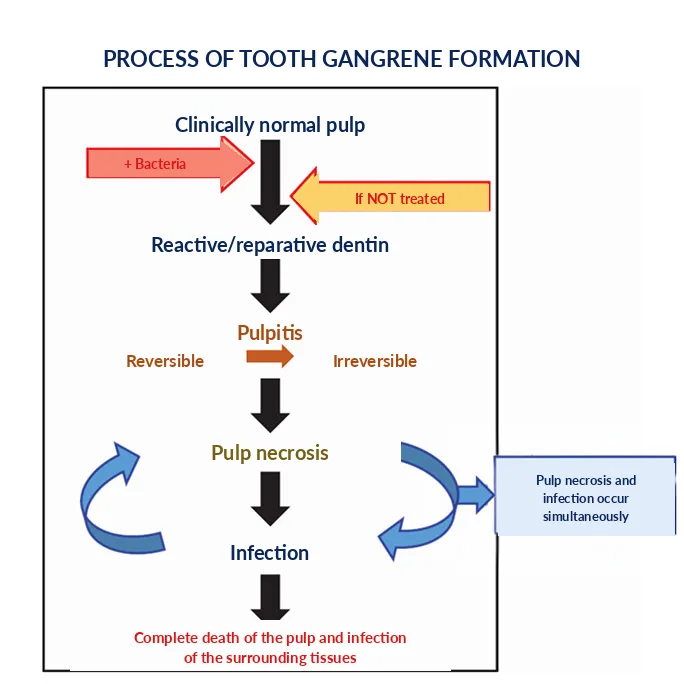
Pulpitis is an inflammation of the pulp (the inner soft tissue of the tooth), which contains nerves and blood vessels. Pulpitis can be reversible (in the early stages) or irreversible (when the damage is severe). It is caused by irritations such as:
a deep cavity
trauma to the tooth (a blow, a crack)
thermal shock (excessive exposure to heat or cold)
Tooth gangrene is the final stage of irreversible pulpitis, in which the pulp has become necrotic (dead) because of the infection. Gangrene can affect the surrounding tissues and lead to serious complications.
What are the options for treating tooth gangrene?
Effective treatment at Medstom is aimed at stopping the infection and saving the tooth whenever this is possible:
the first and most important step when a tooth gangrene is suspected is to visit a dentist. An early visit can prevent the infection from spreading to other teeth, to bones or even to the bloodstream;
if the gangrene is limited to the pulp (the interior) of the tooth, root canal treatment is the most common and effective way to treat it. The procedure includes the following steps: removing the infected pulp, cleaning and disinfecting the root canals, filling the root canals and, if needed, placing a crown;
antibiotics may be prescribed to control the infection, reduce the inflammation and prevent complications;
painkillers are given to relieve discomfort while the treatment is carried out.
If the tooth is seriously damaged and cannot be saved by root canal treatment, it may have to be extracted. This usually happens when the tooth has been too heavily destroyed by the infection and when the infection has fully penetrated the bone or the surrounding tissues.
Prevention tips:
Regular cleaning of the teeth and dental check-ups can prevent the development of an infection
Maintain good oral hygiene to prevent the build-up of plaque and the development of cavities
Avoid sweet foods and drinks, which are the main food for the bacteria that cause cavities
If you feel tooth pain, or your teeth become sensitive to heat, cold or sweet foods, seek dental help immediately. A tooth gangrene is a serious dental problem that requires fast and professional intervention. At Medstom we have all the necessary conditions and expertise to provide the best treatment. Early detection and treatment of tooth gangrene can help prevent the spread of the infection and reduce the risk of complications.