
3D technologies and virtual engineering have rapidly entered everyone's daily life, while at the same time penetrating all areas of life and work.
An example of this is three-dimensional visualization and virtual reality, 3D printing, 3D scanning and tomography, which have a positive impact on the development of various industries and sectors of business and services, including medicine.
Undoubtedly, technologies play a key role in the evolution and development of medicine in all its forms.
Numerous scientific developments quickly become reality and help people live and work better in a variety of ways. In medicine, the use of 3D technologies is developing in various directions, and in recent years there has been a very intensive application of technologies in the dental field.
This happens thanks to CAD/CAM systems, with the help of which the design and production of implants have been placed at a functionally new level that has no analogue compared to the methods existing to date.
The fabrication of a prosthetic structure on a situational digital model is necessary for the proper planning of a given treatment, and is also of extreme importance for the success of the final structure.
Why are CAD-CAM technologies useful in dentistry?
The CAD-CAM system is a fully digitized design of the dental arches. With its help, personalized 3D crowns and dental bridges can be created that perfectly match the individual characteristics of the patient.
With the accuracy and reliability of the modern production processes of the CAD-CAM system, remarkable precision is achieved in scanning the oral cavity, which helps in the fabrication of individual prosthetic structures.
The CAD-CAM system contains a wealth of three-dimensional data and shows what is achievable and its limits.
Digital dentistry also has a key role in the communication between doctor and patient, as the patient can gain a clear and accurate idea of the upcoming treatment.
The technology answers many questions, such as what the functionality of the prosthetic structure is and what its guarantee over time is.
At Medstom dental clinics, we chose CAD-CAM technology to close the circle between patient, dentist and dental laboratory.
Many clinics in Bulgaria still rely on outdated methods of restoring teeth, namely by sending the impressions to dental laboratories for fabrication. Besides being slow, this technology depends heavily on the skills, experience and momentary condition of the dental technician.
It often happens that the model is not accurate enough and it has to either be returned to the laboratory for correction and/or further refined on site by the dentist. This is associated with inconvenience for the patient, as well as with multiple visits to the dentist's office.
CAD-CAM aesthetics
Combining proper planning and fabrication of structures through the digital models of 3D printers supports the aesthetic value of the fabricated materials. This is possible by achieving harmony through the integration of the face into the treatment plan.
In aesthetic dentistry, CAD-CAM systems have an exceptional role, because through them the structures for the patient can be fabricated with absolute accuracy and precision.
The Smile Design capability of the software provides an accurate 3D image of the dental arches and the shape of the teeth.
Colour determination is extremely precise, which in turn brings greater patient satisfaction.
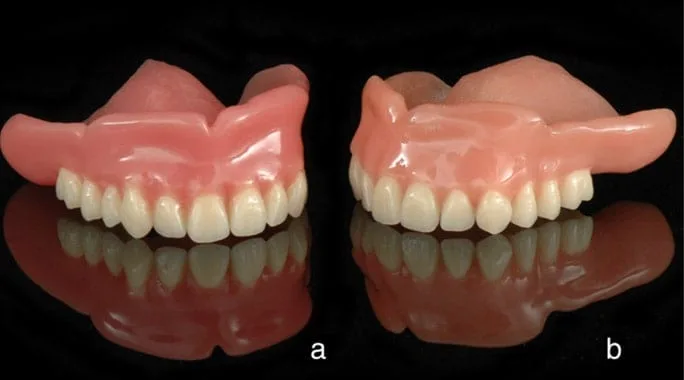
Steps for working with CAD-CAM technology
Step 1:
Automatic photographing and scanning with the innovative 3shape Trios 3D scanner takes the impression for making a crown/bridge with absolute precision – so as to guarantee maximum fit when placing the prosthetic construction.
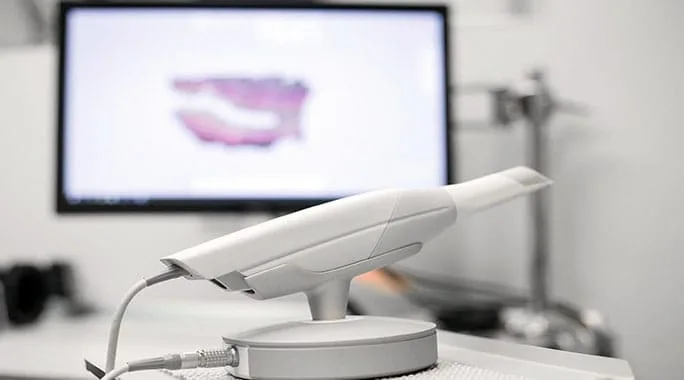
The oral 3D scanner has the following advantages:
Highest technology and scanning accuracy
Flexible hardware configurations
Wide range of indications, which allows maximum precision in work
Integrated intraoral HD camera for quick and easy colour determination
Dental Smile Design
Step 2:
CAD-CAM technology uses 3D CAD software that precisely processes the information coming from the scanner, building a three-dimensional model of the scanned object based on it. Thus, based on the impression taken, a computer digital image has already been created and can be sent by email or another digital format for approval by the patient. The software includes a rich set of all modules for dental laboratory design, with no existing limitations.
Step 3:
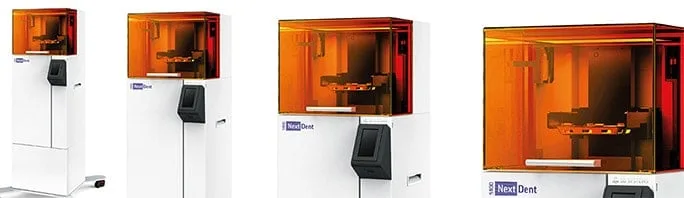
Use of a 3D CAD printer for three-dimensional modelling of crowns, bridges, inlays, etc., instead of manually shaping the same from technical wax.
The printer is developed on the basis of revolutionary technology that has a wide portfolio of materials for 3D printing. With its help, our dentists can quickly and easily produce individual trays, models, surgical guides, dentures, orthodontic splints, crowns and bridges of various sizes and customised shape for each individual patient.
Step 4:
When the program has prepared the correct 3D model of the bridge construction, it can be placed on the patient without the need for additional corrections by the dentist.
For the production of prosthetic constructions, various types of materials can be used – chromium-cobalt alloys, zirconium oxide, as well as various types of polymers, some of which are also suitable for the production of burnout models.
Advantages of the CAD-CAM system in dental medicine
There are numerous advantages to using 3D dentistry in dental implantation procedures and prosthetic treatment.
Modern computer technologies allow precise scanning and production of prosthetic constructions.
High precision in work - the technology enables the implementation of the full set of characteristics compared to the conventional methods and principles known in dentistry.
Fast production - an important advantage of CAD-CAM technology over conventional methods is that here there is no need to optimize the construction from a technological point of view. Physical models with complex shapes can be produced that would otherwise be unjustifiably expensive or even impossible to manufacture.
Choice of production from various materials - chromium-cobalt alloys, zirconium oxide, as well as various types of polymers, some of which are also suitable for making burn-out models.
The CAD-CAM system takes dental laboratory production to an entirely new level, which for the moment has no analogue among existing conventional techniques, neither in terms of the degree of quality achieved, nor in terms of production speed, nor in terms of cost. To this should be added the convenience for patients, who with practically only two visits to the dentist (taking impressions and fitting) will have a high-quality implant created specially for them.


